

Phases in the musical production of an EP or album
The stages that all music production goes through are many, some unknown, before the music of a group or artist becomes a physical album or digital audio that can be bought or listened to on streaming platforms.
The music producer is always in command of all of them, whose main function will be to help the artist throughout this process, to be able to capture his original idea and turn it into a finished commercial product ready to be successful.
What is a music producer necessary for?
There are many tasks that a music producer performs, both creative and administrative, and they range from being the one who makes the initial budget and ensuring that it is strictly adhered to, to controlling the last touches of the mastering.
But he is also the one who ensures a creative and calm environment in the studio, sometimes acts as the artist’s psychologist, is the one who makes the often difficult but important decisions, and who maintains the final vision of the project during all phases of production. musical.
Let’s see which are one by one these 10 stages of musical production necessary for the creation of an album, and that I will focus from my perspective as a music producer in so many albums, and that I will basically divide into 3 main areas: Pre-Production, Production, and Post-Production.
Summary
We can divide the stages of music production into 3 main areas: Pre-Production, Production, and Post-Production. In command of all of them will be the music producer, whose objective will be to turn the artist’s original idea into a finished commercial product ready for sale.
Preproduction
In this first part of the process, the producer will carry out mainly administrative tasks, such as signing contracts or preparing the budget, but also creative ones, supporting the author in the composition of the songs, even collaborating as co-author, and organizing the musical arrangements.
1Budget making
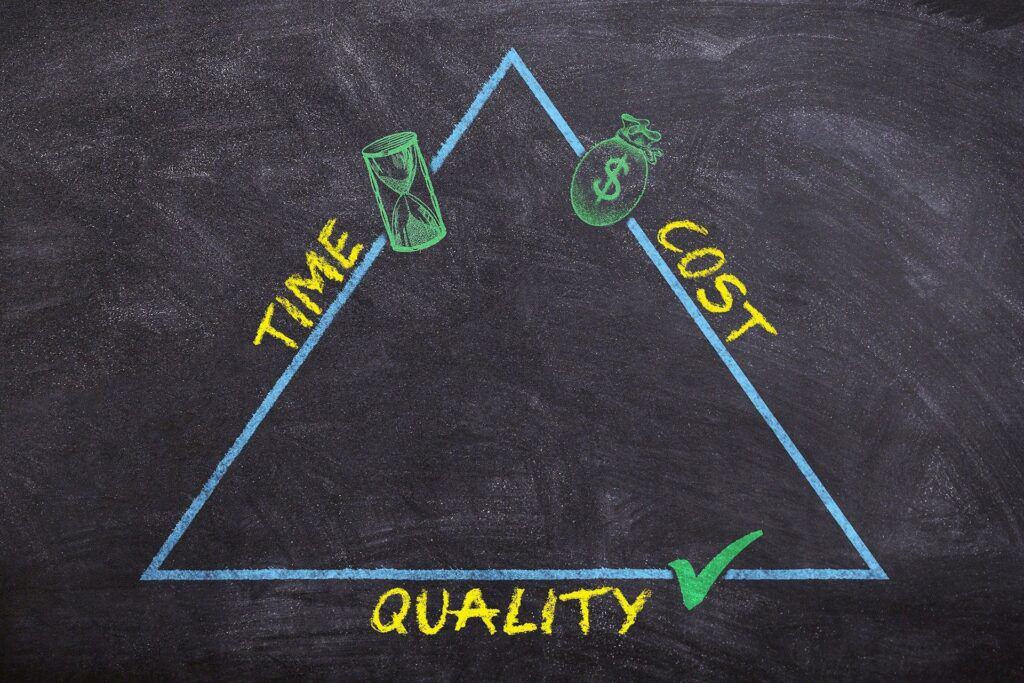
As the saying goes… “The only thing that starts at the top is the wells”, and the first and most important thing before starting a musical production is to make a budget. This administrative task is sometimes carried out by the executive producer who provides the money for the album, although not always, but in any case, it will be based on the figures provided by the music producer.
The budget must include all the expenses of the studio or different recording studios, travel and travel by car or plane, hotels, meals outside and inside the studio, extra personnel such as session musicians or choirs, sound engineers and recording assistants, and finally the salary of the mastering engineer and the salary of the music producer.
If you are a new producer, when making your budget you will have to calculate the days that you are going to dedicate to the entire process and multiply it by your daily rate, so that this quote is profitable for you.
2Signing of the record and production contract

In addition to the budget, as a producer, you will have to draft and monitor your own contract with the company, but at the same time that of the artist for you and with the company itself, if any. Your duty will be to advise the artist and look after their interests, in addition to looking after your own too, hehe…
Know and understand well all the legal terms present in this type of contract, as well as everything related to royalties in each country, and the legislation in each case/country on patents and trademarks, other problems that often arise in productions with bands, is a priori quite important if you want to be a real music producer.
On the other hand, if as a producer you are involved in the composition of the themes, you should know everything related to intellectual protection rights to control that the themes are protected. You will have to decide whether or not to register with a music publisher and check that they are registered with a management company in a correct and equitable way, in order to later receive the copyright that legally corresponds to you.
3Licenses for the use of covers, samples and loops
If the album contains original songs by other artists, the producer will have to find the copyright owner to get their permission and license. In Spain, the simplest thing is to consult it at the SGAE. The author or publisher will put a price on the license, without which, we will not be able to include said version or cover on our album.
Using loops or samples from other tracks is very common in certain types of music such as Hip-Hop or electronic music, but in order to include them in a track, the producer must obtain permission from the original authors.
In the event that the artist or group collaborates with another artist who has a contract with a label other than ours, the producer, although our company will help with this, will have to obtain the authorization of the invited artist’s label.
4Composition and musical arrangements

The most creative music producers tend to be more directly involved in the composition and musical arrangements of songs. Many are just programmers or arrangers, but others are excellent composers and lyricists whose contribution to the records they produce makes them as famous or more famous than the artists themselves.
Correctly planning the structure of the songs, the arrangement, and the instruments used is essential for them to work. Sometimes the famous “Hit Makers” just add a little sound or effect that makes the song a hit, but it’s normal to have professional music producers or arrangers at this stage of pre-production.
In any case, a good music producer must know well the musical style and influences of the artist, his previous works, and know how to identify his strengths and limitations to choose the correct tone and tempo for each song. In addition, he will contribute his experience to improve the interpretation of the singers or musicians of the band during the recording.
The music producer will also help the artist to filter and choose the songs, to make the demos or demos, and to choose the ideal staff who will participate in each one, such as session musicians, choirs, recording and mixing engineers, etc…
Home Studio or How to save on the pre-production process
Since the appearance of the first sequencers and later DAWs (Digital Audio Workstations), software that allows digital audio editing, most of the pre-production process, and a large part of the production process, are carried out before reaching the study.
Most of the Music producers work on musical arrangements from their own home studio or (home studio), which allows not only to lower the cost of the pre-production and the subsequent recording process but also to be able to have a fairly approximate idea of how the song will finally sound once it is recorded.
This is possible thanks to how realistic virtual instruments are today, always depending on the quality of the programmer or arranger, and the leap in quality in DAWs, sound cards, synthesizers, samples, and plugins in general, which has been achieved. the music industry in recent years.
Summary
During the pre-production process, the music producer will prepare the budget, advise the artist on signing the record contract and sign their own production contract. He will also find out the legal situation of the songs, obtain the licenses for their use, if necessary, and could collaborate in the composition and musical arrangements of the same as another author.
Production
In this second part of the process, the producer will work on his most technical side, directing the sound engineer in the recording of instruments, voices, and choirs, and finishing by editing and producing the recorded tracks before taking them to mix.
5Recording and Production

With all the songs ready and arranged, it is time to rent a sound studio to record. The music producer is the one who establishes the studio hours, the days necessary for the recording, and will coordinate each extra musician or singer necessary when he plays, as well as the engineers, assistants, etc., all this while efficiently managing the resources assigned in the budget.
During the recording, the producer will be the one who directs the artist or musicians in the right direction, always keeping the initial vision of the project clear, and who will make the difficult decisions when the time comes, regarding the type of sound or interpretation of the musicians or artist.
It will also be who decides the type of outboard or microphones, and the most suitable placement of these for each instrument, although in this the sound engineers usually help a lot. And also who is clear about the type of effects, pedals or equipment to be used, especially if these effects are to be imprinted on the recorded track forever.
Finally, the music producer must be the guarantor at all times to maintain peace and good vibes in the studio, seek a creative environment throughout the process, and if necessary, act as a psychologist or personal coach for those who need it, he, he…
6Additional recordings or overdubs

In more professional productions, sometimes it is necessary to coordinate other types of additional recordings or overdubs, such as coordinating the recording of another guest artist in another studio for a duet or recording with a symphony orchestra and choirs some of the songs on the album.
The producer will have to hire and coordinate the different professionals involved in said recording with an orchestra, such as the orchestrator who will make the musical arrangement, the copyist who will make the score and the parts of each instrument, the conductor, and finally hire the orchestra. suitable for each topic, because not all are the same.
7Edition
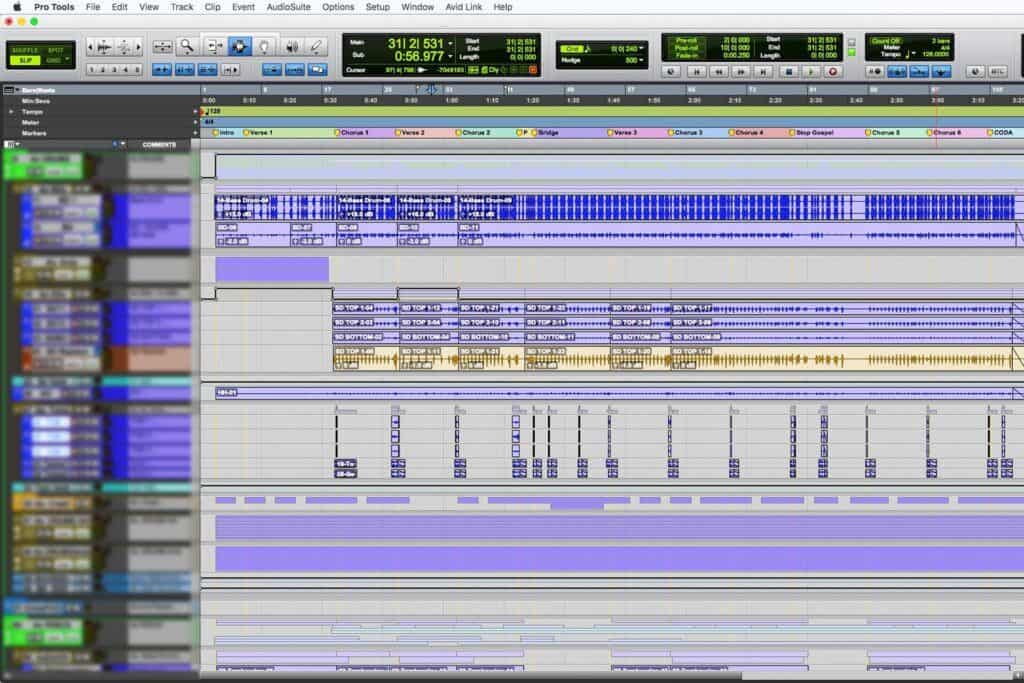
Once the recording process is finished, one begins a little more boring, or not, hehe .. which is the process of producing the tracks, which includes editing, composing, tuning, applying effects, and other various settings.
All these processes will be lengthened in time depending on how well or badly we have done the recording process. That is, if we have recorded correctly, editing and tuning will occupy a small part of our time, and the rest, we can use it in the favorite part of every music producer, the creative part of the production itself.
In this production step is where the producer plays with the different parts, tests different effects, makes changes and makes decisions regarding which takes of the voice are best at each moment, or which solo or instrument is the one that most excites and makes the song works better.
Once we are clear about each topic, the music producer will do a general cleaning of the tracks and will make a first reference mix or rough mix, which will be of vital importance not only for us and the artist but for the person in charge of the next process: the mixing engineer.
Summary
In the production process, the producer will ensure that both the instruments and the voices are recorded correctly, he will be the one who sets the schedules and the necessary personnel for the recording, and will determine the equipment or outboard necessary for it. If necessary, he will coordinate any extra additional recording, and finally he will work on the editing, tuning, and other production work, as well as on a mock-up as a first idea of the final result as a reference for the artist, the sound engineer and the label company.
Post-Production
Post-production is the last stage in all music production. Here the producer has a more passive but more analytical role, in order to help the engineer shape the mix following his original vision and concept. In the final step, mastering, you will try to improve the final sound, without detracting from the good work done in the recording and mixing.
8Mix
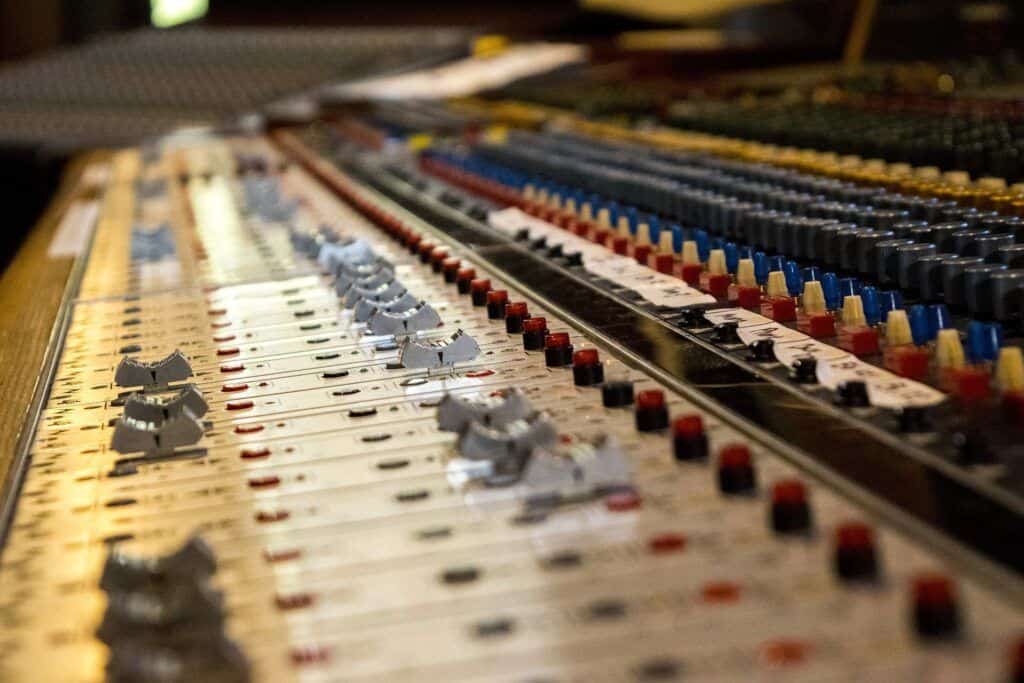
We come to the first step of the production process: mixing, in my opinion, one of the most important parts, but not the most important part of the process of creating a record.
A bad recording can be partly covered up by a great mixing engineer, but a bad sound engineer can completely destroy all the magic of a recording that has been sublimely and technically correct.
The mixing engineer is without a doubt the person who will ultimately transform all of our recording efforts into the final product that everyone will hear and buy. In fact, in many countries (not in Spain), mixing engineers receive between 1% -2% royalties for the mixes they make, something they undoubtedly deserve.
Our demo or mockup will be of vital importance to him, because he will arrive at the project totally blind, and although he will listen to the tracks several times before starting to mix, he could never have our vision as a producer of each song without it. “An image is worth more than 100 words” they say… well a good model is worth the same or more, hehe.
Of course, before reaching our engineer with our tracks to mix, even before recording, it is essential to discuss with him certain technical aspects, such as the software to use, the best sampling frequency, the recording bits, the amount of tracks, etc… All these factors will result in a lower cost of days and money, used in preparing the sessions to be able to mix them.
9Mastering
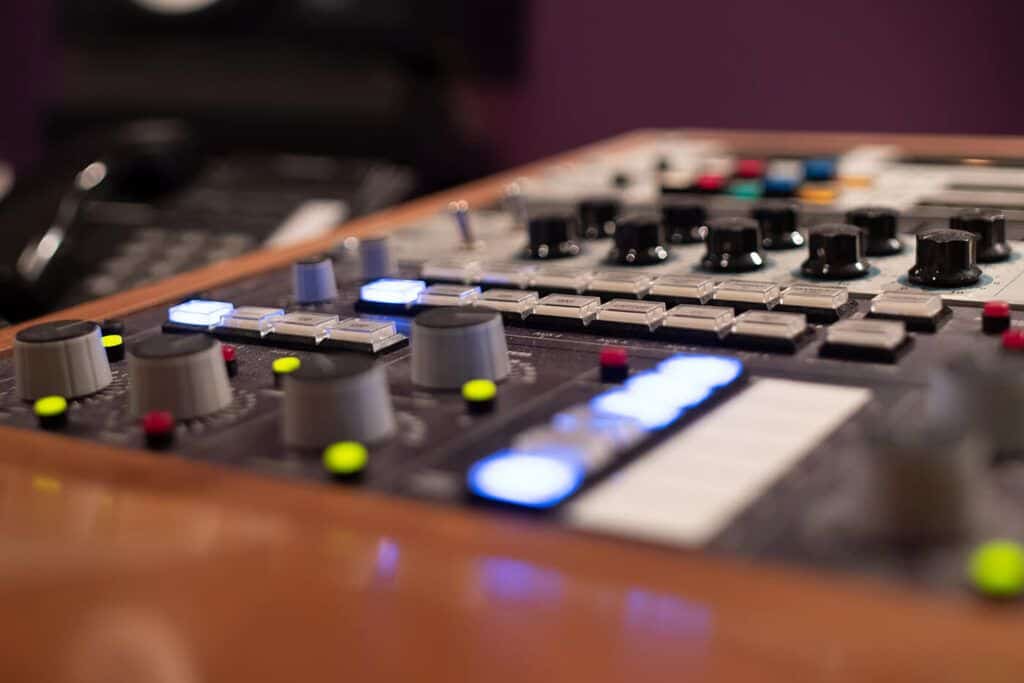
And we come to the last process of creating an album, and also one of the most unknown: mastering, an essential process in any musical production, and that will make the difference between a professional product and an amateur one.
The mastering engineer is a kind of musical notary, who performs final quality control on the mix, and who solves the possible technical problems that it could have if any.
It usually makes the dynamics, equalization, balance, and image adjustments that it considers necessary, and finally, it will apply the necessary limitation to make the album sound good and be commercially competitive both on CD and on other streaming platforms.
The company will ask you for the audio formats that are needed for the distribution of the work, although these would be the most common formats today:
Today there are free or semi-free digital platforms where artificial intelligence can perform an online mastering of any theme and musical style without leaving your computer. However, AI has yet to reach the level of understanding of the human ear that a mastering engineer has. So if you really want to get a professional and quality sound, you should hire one, the best you can afford.
Summary
The final post-production process is where the producer, helped by the mixing and mastering engineers, will shape the final product that will go on sale. He will ensure that the mix not only reflects the artist’s feelings, but also the commercial guidelines of the company, and will take care of providing it with all the formats required for its distribution and duplication.
10Credits or Label Copy
There is a last administrative process, which in reality a good music producer goes through throughout the album, which is to collect all the names of each person who participates in it, in order to later fill in what is known as “Label Copy” or credits of the disk.
I recommend you to carry out this task throughout the process, more than anything for your mental health, hehe … because then you can spend half an hour just trying to remember the name of that guitarist who played that cool gimmick, who was a friend of another friend of yours, and now he does not respond to WhatsApp, hahaha …
In Spain, if you forget to give credit to someone who has participated in the album, nothing happens, well… that person will be very angry with you and will stop being your friend. But be very careful not to accredit someone in an international production, because that person could perfectly paralyze the distribution of the album until his name appears in a new edition for sale.
Normally, this type of situation is usually solved in a friendly way with economic benefits through, and the distribution of the album is never paralyzed. But I am only telling you so that you can see that the subject of credits is something very serious, and it is a task that the music producer must also carry out, and without fail.
11Design and Manufacture of CDs
This last step, number 11 on the list, is totally optional, and it will only work if you self-produce and want to make your own CDs. If this is your case, you will need, among others, a graphic designer who will make the cover and back cover of the album, a photographer who will take the photos of the interior, as well as a creative who will put together all the art and create the script for you.
If your album contains covers, or a track uses loops or samples from other original tracks, remember to ask for permission and get the license. The mere duplication at the factory of any cover, even if you do not sell it, contravenes the Intellectual Property Law. In fact, the factory will require this license from you before starting to print your albums.
Finally, you will have to decide how many CDs you want to make, how quickly you need them, which will influence the price, the type of packaging, case or sleeve, another factor to take into account for the final price,
Other things to keep in mind
Album title and order of tracks
Although it seems silly, naming the album and deciding the order of the songs within an album is more complicated than it seems, hehe. But it is something that the producer has to decide necessarily before doing the mastering since it decisively influences this process.
There is no written standard for this, and both the artist and the company can help with it. But if it is true that the single, especially if it is a fast tempo, does not usually go in the first place, if not in second or third position, and the most relevant songs are usually placed in fifth and eighth place.
In some way, and although it is no longer relevant because since streaming services have existed, almost no one listens to a CD in its entirety, it is always seeking to maintain the interest of the listener throughout the listening, and obviously, to put the three ballads of the album together would not collaborate to it.
What is a DDP and what are the ISRC and UPC codes
A DDP is a 100% digital disk image that the mastering engineer creates, and that contains all the audios of a project, as well as the information of times, names of the tracks, and separation between them, formatted under the standard “red book “or red book.
Before the advent of DDP (Disc Description Protocol), mastering engineers physically created a Pre-Master on CD, which was always subject to errors even though it was recorded at the walking speed of a 90-year-old grandpa.
But before the mastering engineer can generate the DDP to send to the duplicator plant, the music producer will have to get the ISRC codes (International Standard Recording Code), which uniquely identify each track on the album, and the UPC code (Universal Product Code) that uniquely identifies the CD itself.
The record company will be the one who will get you the ISRC codes, which in turn will request the management entity in charge of managing them, which in Spain is AGEDI. The UPC code, or better known as a barcode, will be generated by the record label itself under the EAN13 or GS1 standard.